Saturday, June 30, 2018

934 Days

If Donald Trump makes it to the end of his term, as of today, 934 days of his presidency remain. If he is re-elected… No, I can’t bring myself to go there.
So far, he has been president 526 days. That means that roughly 526 times I have watched the news at the end of the day, overwhelmed by a combination of disbelief and despair. It's not a good way to go to bed at night. I know I’m not alone. There are many of us who wonder how we will survive 934 more days of this.
Let me say that a part of what makes this difficult for me, personally, is the fact that I serve a congregation where we don’t all agree about our current president. And there are people I honestly love and care for who support him. I continue to love them, even though I strongly disagree with them. This is the Jesus Way. We continue to love one another despite our differences. This means that I will not shut them out of my life. But that doesn’t change the responsibility I have to speak God’s truth. It’s my job, as their pastor, to love them and to speak God’s truth to them. And damn, that’s hard these days.
As I read the Scriptures, I see that God is all about mercy and justice. And by justice, I don’t mean that in a law-and-order kind of way. God’s justice can’t be separated from God’s mercy and compassion. God’s justice is about leveling the playing field. Lifting the lowly and toppling the mighty ones from their thrones. So, God’s justice has a bias—a bias for those on the bottom. Jesus embodied that bias in his life, from the manger to the cross. Following the Jesus Way means standing on the side of the poor and marginalized. 
For the past 40 years, I have been proclaiming the truth of the gospel no matter who our president happened to be. But preaching the gospel is difficult these days because when I do, people think I’m criticizing our president. I don’t even mention his name, but their minds go there. This makes some people cheer while others are angry with me. Can you see why my stomach is in knots these days?
Now, my friends who are Trump supporters tell me that this is how they felt when Obama was president. But I don’t think so. I would compare the way they felt when Obama was president with the way I felt when Reagan was president. It was disturbing, and I was hanging on, waiting for the pendulum to swing, but that can’t compare to the way I’m feeling now.
If you talk to any therapist, they will tell you that the current political climate in America is good for their business. The despair has created a mental health crisis for many people. Some days I feel like I’m hanging on by a thread, but I’m muddling through it.
There are things I’m finding I must do right now, so that I can continue to function in the world where God has planted me. I have to limit my time on social media as well as CNN and MSNBC. (You might be amused to know that my cable package doesn’t include FOX News. It took me over a year to discover this.) I’ve decided that somewhere between burying my head in the sand and wallowing in 24-hour misery, I can find a place that’s healthy for me.
Instead of watching the same train wreck 100 times, I am re-watching West Wing on Netflix. At the end of every day I see what’s going on in the world for about 20 minutes, and then I escape into a fantasy world where Jed Bartlet is our president.
The weird thing is that this is the third time I’ve watched the entire season and I have never reacted to it as I am now. I have a box of Kleenex beside me because, at the end of every episode, the tears flow. I remember being this way with sappy shows like The Waltons and Little House on the Prairie. In the last five minutes they manipulated my emotions. I knew they were doing it, and I cried anyway. But never before has West Wing had this effect on me. I keep putting myself through the tears because it’s a good cry for me. There is an idealism about the show and a patriotism that gives me hope. It’s helping me hold on.
I wonder how many more times I will go through an entire season of West Wing in the next 934 days.

Sunday, May 27, 2018

Pole Dancing for Heretics

The sermon for Holy Trinity Sunday, 2018.
 
We don’t have to re-invent the wheel. It’s what we often say when we’re starting out on a new venture. We look at what other people have done who have faced similar challenges and use what they’ve already figured out. But once upon a time, before there were wheels, there were actually people who invented them. Can you imagine what that must have been like?

2,000 years ago, when the followers of Jesus formed the church, it was a lot like re-inventing the wheel. They did have their Jewish roots, but the notion of a monotheistic God, like the God of Abraham and Sarah, was no longer large enough to explain their experience of the divine. They were pretty much starting from scratch. There was no understanding of the Holy Trinity, and it wasn’t spelled out in the scriptures, anywhere.

The questions that were long ago answered for us were all up for grabs in those early years. Who was Jesus, really? Was he God, was he a human being? How did Jesus relate to God the Creator? Did the Creator create Jesus? And how does the Holy Spirit that came to Jesus’ followers after Jesus wasn’t walking this earth… how does the Holy Spirit fit into all of this?

A variety of understandings were floating around, and things remained that way for about 300 years.

The early Church did finally arrive at the doctrine of the Trinity. God as Father, Son and Holy Spirit was explained in the ancient creeds of the church. Those creeds have continued to define orthodox Christianity all these years later. We have three that we lift up: the Apostles’ Creed, the Athanasian Creed, and the Nicene Creed.

The Apostles’ Creed is also known as the Baptismal Creed. The Athanasian Creed is so long and weird that we rarely use it in public worship.

The Nicene Creed is the one that has the most interesting history. In a nutshell, there was a shady collusion between the Emperor Constantine and the bishops that was all about power. Each wanted to use Christianity for their own purposes, and it culminated at the Council of Nicea in 325. That’s how we got the Nicene Creed.

The original purpose of this creed was to unify the empire by weeding out anyone who didn’t agree. It became the standard that led thousands of heretics to be tortured and burned at the stake.

Over the next 1500 years, although most Christians quit executing those who disagreed with them, Christianity became all about believing in the right way.

Lutherans have been no exception. Most of us lifelong Lutherans, educated in the faith way back in the 20th century, were taught by memorizing the right answers. We weren’t nurtured into the life of faith so much as told what to believe.

This feels like a different flavor of fundamentalism to me. Fundamentalists have the definitive answer to every question. Fundamentalists must have certainty and they can’t deal with ambiguity. Fundamentalists tell us that there is only one right way to believe. Reciting a creed can feel that way, too. It’s like we’re saying, “Here’s what you gotta believe about God.”

As an educator, I have to push back against this. Faith isn’t cast in stone. It develops throughout our lives. A basic level of faith takes everything literally. It’s a right and wrong, law and order way of looking at the world. Something that’s typical of a person in elementary school. Unfortunately, some people get stuck there. But if all goes well, a more nuanced faith develops in our late teenage years, when our brains have grown large enough for us to think abstractly. As our faith continues to grow, we allow for ambiguity and mystery. Later in life, some people pass into a universalizing style of faith that goes beyond all of this. That’s the process of faith development for us. And this is the reason our rigid creeds may not be all that helpful.

But before we throw them out completely, let’s back up a bit and consider how they might serve us in the 21st century.

Creeds are not about faith; they are clusters of beliefs. There’s a big difference between belief and faith, although most people seem to use those words interchangeably.

In Harvey Cox’s book, The Future of Faith, he does an excellent job of making the distinction. He cites a story by the Spanish writer Miguel Unamuno, that goes like this…

A young man returns from the city to his native village in Spain because his mother is dying. In the presence of the local priest she clutches his hand and asks him to pray for her. The son doesn’t answer, but as they leave the room, he tells the priest that, much as he would like to, he cannot pray for his mother because he does not believe in God. “That’s nonsense,” the priest replies. “You don’t have to believe in God to pray.”

The priest in the story recognizes the difference between faith and belief. Faith is more at the core of our being than belief. Beliefs, you can argue about, but not faith. Faith is putting your trust in someone. It’s a way of life. It’s a relationship. It’s of the heart. It’s fluid. It grows. A belief is more like an opinion. It’s of the head. It’s concrete. It’s possible that it may one day be discarded, but it never changes. Again, creeds are not about faith; they are clusters of beliefs.

In his book, Cox separates Christian history into three eras. First, there was the Age of Faith which stretched from Jesus to the time of Constantine in the fourth century. 

Then, from the time of Constantine until now, we’ve been in an Age of Belief. But now, Cox says, we’re entering a new age, the Age of the Spirit. Much like the early church, it’s an age of faith.

We’re returning to a time when doctrinal questions aren’t all that important. There were lots of different beliefs about God floating around in the first centuries of Christianity, and no need to agree on every point. The important thing was not belief, it was faith. No longer identifying correct doctrines but experiencing a relationship with God. In the early church there was never a single Christianity. There were many. It wasn’t until the time of Constantine that we got so hung up on our beliefs and rooting out heretics.

The fact is, despite the church’s attempts to root out heretics, they have always been with us. Thank God! For without them, where would we be? Heresy is healthy for the church. It’s always been the heretics, the ones traveling on the fringes of orthodoxy, who have moved the Christian church to a new place. Martin Luther is the most notable. Heretics have been God’s agents of transformation.

It seems to me that if there is any purpose for our ancient creeds, it’s that they give us a center. We don’t have to agree about everything. But the Trinitarian creeds remind us where the center has been for the Christian church over the past 1600 years or so. That center remains significant for us as we find our way on the journey of faith.

Some of us may be far from the center, but there’s value in knowing where the center is because it’s that center that holds us in community, even as it holds us in God’s presence.

Our Trinitarian understanding of God isn’t the only way God is experienced in the world. For us Christians, it’s our center, but there are other centers for other peoples. And while our centers may be different, often our circles overlap so that those of us who have moved far from the center may find ourselves in more than one circle at the same time.

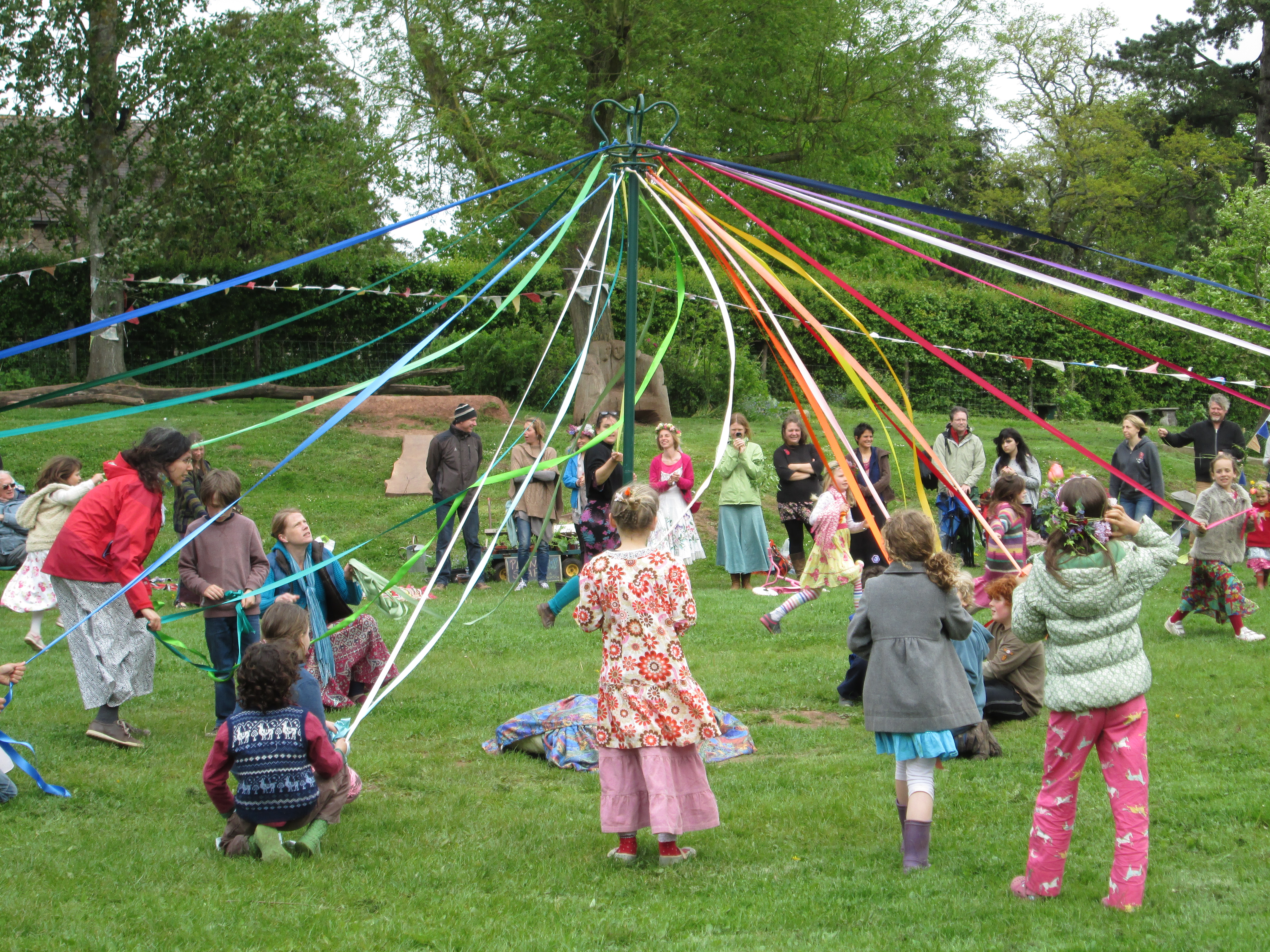
Way back before the Nicene Creed, the metaphor of the dance was used to describe the Triune God. It’s a dynamic faith image. It’s relational, it moves, it grows, it includes. Father, Son, and Spirit are inviting us to dance with them. And maybe, that’s the key to saying the Creed together on a Sunday morning. It invites us into a circle dance. Perhaps it’s something like dancing around a maypole. None of us is required to stand in the center and make a statement of belief that’s a litmus test for God’s people. But we can dance around that center, some close to it, some way out on the fringes, some weaving in and out.

The important thing is that we all share the same center, we’re all in the circle; we’re all in the dance.

 See the source image

Tuesday, May 22, 2018

A grateful preacher


Years ago, I read that being a pastor is like being the lead dog in a team of Alaskan sled dogs. You’re the only one who can see what’s on the horizon, so you need to tell the others what you see. That way you can keep moving forward together. (This isn’t exactly how the quote went, but that’s how I remember it.) Sometimes I feel more comfortable in the role of lead sled dog than others. And I’ve often wondered if it’s true. Are the others who are a part of my team even listening to what I have to say, or am I barking in the wind? This was particularly true back when I was a young woman struggling to be taken seriously.

This past Sunday, on the Day of Pentecost, I preached a sermon that challenged my congregation. I tried hard not to be scolding, but I suspect for some it may have sounded that way. What they may not realize, when I’m preaching one of those sermons where I’m pushing them to become more than they are, is that while they’re squirming a bit in the pews, the most uncomfortable person in the place is in the pulpit.

I did my best to soften my words because a) I truly do love these folks, and b) I know nobody is going to hear a word I say if I alienate them in the process. And yet, it was the challenge of the gospel, and I knew it had to be said if I am really a pastor to these people. So, I said what I felt compelled by the Holy Spirit to say, and I trusted that the same Spirit would use my words to move within the people of Ascension so they might become all that God intends for them.

Guess what! Last night, at a committee meeting, people were talking about the challenge I put to the congregation in my sermon on Sunday morning. They were listening! They took exception to one of my points, and rightfully so, I realized. But mostly, they embraced the challenge. They wrestled with how my words could draw them forward in the ministry we share.

They had no idea how moved I was by their conversation and how affirmed I felt as their pastor. My energy for ministry has been a little low lately, so I really needed this. And I must add that I often receive feedback from the congregation after I preach; my sermon doesn't end for them in pulpit/pew. They actually listen, and they take my words seriously. It’s one of the reasons why I love serving Ascension, and it’s why I work harder on my sermons now than I ever have with any other congregation. Preaching matters for them.

There’s something to be said for the team of sled dogs barking along with their leader so she doesn’t feel all alone. She needs to be reminded that she’s not bearing the weight on her own, and she needs to be encouraged to continue. I’m grateful to serve with such a team.

Friday, May 11, 2018

Wait for it...? I'd rather not.

(Understatement alert!) I don’t do very well with the whole waiting thing. For example, I always have to read how a mystery turns out before I work my way to the end of the book. In the same way, if I'm binge-watching on Netflix, I watch the first few episodes of a season and then go to the last one. If I'm curious about how the plot arrived at its ending, I'll go back and explore what's in the middle. But cutting to the chase is often all I need to be satisfied. 

They say that the best things in life are worth waiting for, but I say, if they’re so darn good, why wait? So, for me, the only waiting I do is waiting that is forced upon me. I can’t remember the last time I waited for something by choice. Delayed gratification isn’t all that gratifying to me. I eat dessert first a lot!

I suspect that technology hasn’t served me well as a wait-er. When I first started using the internet and dial-up was my only option, I could sit and listen with amusement to the cartoon noises my computer emitted while I waited for the little hamsters exercising on their wheel inside to grab onto a connection. Now I would gladly choose water-boarding over going back to a dial-up connection. My tolerance for waiting seems to diminish every time I flick my finger and receive an instant result.

The real problem for me is that people aren’t machines. I can’t right-click and get them to do what I want them to do when I want them to do it. And so, I sit and wait for the doctor to give me test results. I wait for the cable guy to come to the house so I can get on the internet again. I wait for my daughter to call me back on the phone. Being human myself, I understand the limitations we all have. When I deal with other people, I have no choice but to wait. And the more people I have to deal with, the more you have to wait.

Have you ever traveled with a group of people? The more the merrier? Not for me! The more, the crabbier. We’re always waiting on someone. Gladys is in the gift shop. Herb is in the bathroom. Stan locked himself out of his room and needs to get a key. Shirley can’t find her sun glasses. When I picture hell, I imagine it as an endless group vacation.

It’s occurred to me that all waiting is not created equal. At this moment, there are members of my congregation who are waiting for a child to be born. Another is waiting for a parent to die as she lives through her final days. Those events are just a matter of time. You know they’ll get here sooner or later. 

Open-ended waiting is another matter entirely. That’s waiting for something that may or may not ever happen. I have dear friends who are waiting for their next job right now. Despite their best efforts, doing everything in their power to make it happen, they’re left with endless waiting. And they wonder, “Am I waiting for nothing?” Waiting with uncertainty is so much more difficult than waiting when you know that it’s just a matter of time.

And that brings us to the worst kind of waiting: waiting till the cows come home. That’s when you’re waiting for something or someone to come along and magically change your life. There’s a fine line between having faith that your future will be better than your past and passively sitting back and waiting for your future to find you. I’m not one to wait till the cows come home, and I don’t have a whole lot of patience for people who do.

Waiting for social justice is in a category of its own. Waiting for the hungry to have bread. Waiting for all children to be offered dignity and love. Waiting for a time when no one is excluded from God's circle of grace. This is waiting for the inevitable, but it's not done passively. It's an active kind of waiting. I trust that God's gonna do what God's gonna do, with us or without us. But God's will is accomplished a whole lot sooner with us, and so this is an impatience that won't allow me to rest.

I've long hoped that I would learn to wait patiently as I aged. It hasn’t happened for me so far, and I wonder if it ever will. If anything, I seem to be more aware that my time is running out, which exacerbates my sense of impatience.

I realize that my life would be better if I could learn to wait with a certain amount of grace, if I could stop fighting it. I think of the passage from Ecclesiastes that the Byrds first introduced to me back in the days before I ever cracked open a Bible. "For everything there’s a season and a time for every purpose under heaven." There’s a time for everything, and that includes waiting. Some things truly are worth waiting for. And sometimes waiting is necessary because we’re not yet ready for what comes next.

Often, there’s a purpose to our waiting, particularly when we look at it as more than just marking time until the next big thing comes along. Henri Nouwen says: “A waiting person is a patient person. The word patience means the willingness to stay where we are and live the situation out to the full in the belief that something hidden there will manifest itself to us.” I really love that. And I can’t help but think that I’m missing out on something significant in my life because I haven't learned to wait with grace.

I know I’m not dead yet. Maybe I can still learn to be at peace with patience. But can I wait while I'm learning to wait? 


Friday, April 13, 2018

For God's sake, be quiet!

I am a restaurant voyeur. It’s one of those things I get from my mother. Although she died when I was in my 20s, I well remember our dining adventures. Whenever we ate out, we enjoyed creating our own little scenarios about the people we saw eating at nearby tables. I still find myself doing that.

When I was younger and saw couples having dinner together, I always thought I could tell if they were married or not just by observing their conversation or lack thereof. If they were chatting non-stop and laughing at one another’s jokes, I figured it must be early in the relationship, perhaps even a first date. But if they ate without exchanging more than a few words, I assumed they had been married a long time and had either: a) run out of things to say, b) grown bored with one another, or c) things had gotten so bad that they were no longer on speaking terms. As I’ve gotten older, I’ve grown to realize that there is another possible explanation for their lack of conversation. Perhaps they are so comfortable with one another that they don’t need to talk.
Being comfortable with silence in one another’s presence is a sign of depth in a relationship. That’s true, not only for our relationships with other people, but also for our relationship with ourselves, and it’s certainly true for our relationship with God.
I always wonder what’s going on with people who can’t tolerate silence. Like the ones who have the TV or music going 24/7 in their homes. Noise becomes an addiction that they can’t live without. I suspect it’s not so much because they crave noise as it is because they're so uncomfortable with silence.
Inside each of us a God-shaped hole that we try to fill with all kinds of stuff that will never satisfy us, like drugs, sex, food, work, exercise, shopping… noise. The more we have, the more we want, as we convince ourselves that this is how we’re going to fill the hole. But it never works. Because only God  can fill our God-shaped hole.
The fact is, inside that God-shaped hole, within the void, is where we actually meet God-- in times of silence.
Sometimes this happens during public worship, although I am painfully aware of how uncomfortable many people are with moments of silence in worship. They rustle and fidget and resist it so much that I would assume there is no God for them in that silence. (As a Lutheran, I envy the Quakers in those moments.)
We can all enter into times of silence intentionally, in our private or shared lives, by practicing contemplative prayer (also called centering prayer). It’s not like the prayers we say that are confined to words--prayers where we chatter away at God, perhaps telling God what we’d like God to do, all bound up in our brains, filling the God-shaped hole with our projections and assumptions about God so that the true God has no place to enter in.
Contemplative prayer is opening ourselves to God, letting go of our agendas and thoughts, so that we can remove the empty space-fillers from our God-shaped holes and allow God to enter in. It’s a time to synchronize our hearts with God’s. This is a practice that I am growing to appreciate more and more, as silence has become for me, not something to be avoided, but a welcome friend.
If you're longing for a deeper connection with God and this is a practice that you'd like to explore, please give yourself permission to try. It may mean working through your discomfort with silence. You probably won't get there in one sitting, but if you stick with it, it will change your life. (I know it may sound presumptuous of me to make such a claim, but I truly believe this.)
Here are some websites you might find helpful:
https://cac.org/ (Sign up for the daily meditations which are delivered to your inbox.)


Friday, April 6, 2018

Do we have an immigration problem?

About a year ago, at Ascension we began exploring the possibility of offering our parsonage as housing for a refugee family. Not long after that, a Syrian family of eleven moved in. From my friendship with them, I have learned how culturally bound my expectations of others tend to be. I have made a lot of assumptions about what the Ismaels need only to learn that I'm usually wrong, and what I thought they need is not at all what they need. I have learned to listen, and pay attention to what I'm hearing, so that rather than expecting them to become like me, I can appreciate who they are as human beings just as surely created in the image of God as I am. Welcoming them into our midst has been a holy undertaking, to be sure. 

There is a lot of disagreement in our country about how welcoming we should be to immigrants and refugees these days. The inhospitable (and often downright hateful) attitude some Americans have toward immigrants puzzles me. Especially when so many of those same people claim to follow Jesus. I don't get it. 

With the exception of Native Americans, we all came here from someplace else, so how can we have such animosity toward immigrants? I'm told that the problem is with illegal immigrants. Okay. Maybe. But I’m not convinced.

I suspect that what bothers us, if we're honest, is the otherness of people who just aren’t like us. An us-and-them way of looking at the world is hard-wired into us. Way back in our cave-dweller days, it was a matter of survival to be wary of the other. So, maybe that explains why we always have to have someone who is the other, someone we perceive as a threat to our way of life. Whether it’s the Irish, the communists, the blacks, the Jews, the Muslims, the gays... Our need to protect ourselves from the other may be inevitable.

Years ago, I attended a meeting of the Homeowners’ Association in my neighborhood, and I was both amused and dismayed to hear the people around me blaming all of the negative occurrences in our neighborhood on the people who lived in the condominiums. A huge development, it was well integrated in almost every way. However, we still managed to identify someone to be the other. While the majority of us lived in houses, there was a section of the development that consisted of condos. And, apparently, those who lived in the condos were the ones who weren’t cleaning up their dog poop, went speeding down the streets, and threw wild parties that lasted all night. Really?

A big part of what it means to be a follower of Jesus is going against the attitudes and behaviors of the dominant culture. And while it may appear that the world of Jesus’ day and the world of our day are as different as clay tablets and iPads, our tendency to protect ourselves from the other is common to both cultures.

In Jesus' day, the good religious people worked hard to live holy lives by separating themselves from people who were impure. But Jesus flipped the whole idea of holiness upside down. For him, holiness was expressed through compassion for those considered impure and the inclusion of all people in God’s kingdom. Matthew Fox wrote about this in his book, Original Blessing, suggesting that the true meaning of holiness is hospitality, which is essentially, the offer of safety, comfort, and nourishment to both friend and stranger.

If holiness is hospitality, we are seeing some very unholy behavior in our country. Perhaps, if we could learn to follow the One who put the law of compassion above all other laws, we would see that those we fearfully label as the other are really not that different from us. They risk their lives to come to this country, not because of some evil they have conspired against us, but because they long for a better life for their families. Who among us wouldn’t do all we could to provide food and shelter for our young children or our aging parents? Those who risk so much to care for the ones they love certainly deserve our respect, if not our admiration.

Don’t get me wrong here. I’m not denying that there is a problem. What I am saying is that it is not an immigrant problem. It's not even an us-and-them problem, or a good-guys and bad-guys problem. As much as anything, for those who claim to follow Jesus, it seems to be another one of those are-you-just-gonna-mouth-the-words-or-are-you-really-gonna-follow-him problems.

Saturday, March 10, 2018

Those who vomit

I had been away for two weeks caring for my new grandbaby Justin during the days while his parents were at work, and it was time for me to head home. So, this morning I caught the E Train in Queens to make my way toward Penn Station and my train back to Baltimore. After hauling my suitcase onto a crowded subway, I struggled to keep my balance as I held onto a rail and tried not to fall into the woman beside me. I needed to find a seat.

Spying an unoccupied space at the other end of the car, I worked my way through the people until I finally plopped myself down, holding onto my suitcase like a cello between my legs. What a relief!

Now, if I had looked more carefully, I might have noticed that people were standing all around, but no one had taken this seat. What I did notice was the man sitting next to this space. He was all bundled up in a shabby hat and coat with just a bit of his scraggly, bearded face showing. He appeared to be sleeping. I had seen others like him riding the subways in winter, people who rested their bodies, protected from the cold, as they settled in for the day. He was homeless, but harmless, and I wasn’t above sharing a seat with him.

Then I it hit me. Right in the face. The man reeked of vomit. The kind that smells like rancid dairy products and is so pungent that it burns right through your lungs and pokes at your gut. It was all I could do to keep from gagging. No wonder the seat was empty. And here I was. Lord, have mercy. I quickly began breathing through my mouth.

As I sat there, I noticed how the people around me were reacting to the smell. A family of tourists with two teenagers got on the subway and stood directly in front of me. I could see them whispering to one another, looking at the man with disgust. Yes, he was disgusting. I agreed. I felt trapped and was, at that very moment, searching for alternative seating.

Then I started to think about how I had spent the past two weeks. My nostrils had become accustomed to the smell of vomit… not nearly as pungent as this, but like a diluted version of it, also with the distinct smell of spoiled milk. It was always on my clothes. Sometimes I was so soaked with it that I had to shower, but as soon as I got all cleaned up, *boom*, it happened again. At three months, Justin is like a lot of babies. He spits up pert near every time he eats. I started to get used to it; I’d just wipe the vomit off my clothes and go on.

I hope it doesn’t sound like I’m complaining here, because I’m not. I love that little guy to pieces, and that’s just what he does right now.

I wondered, if I could have compassion for Justin’s vomit, could I not also have compassion for this homeless man’s vomit? And then, I thought about how, at one time, this man was a baby just like my sweet Justin. He may have been held in the arms of his Nana who loved him unconditionally. She may have dreamed of all that he might one day become, never imagining this moment for him on the E Train, riding toward Manhattan, surrounded by people who found him disgusting.

I saw a seat open up a short distance away. It happened right about the time I realized that this man was created in the image of God just as certainly as my dear Justin was. And so I remained where I was.  

I don't think I would have done that three weeks ago, but spending two weeks getting vomited on by someone I love more than anything gave me a new appreciation for those who vomit.